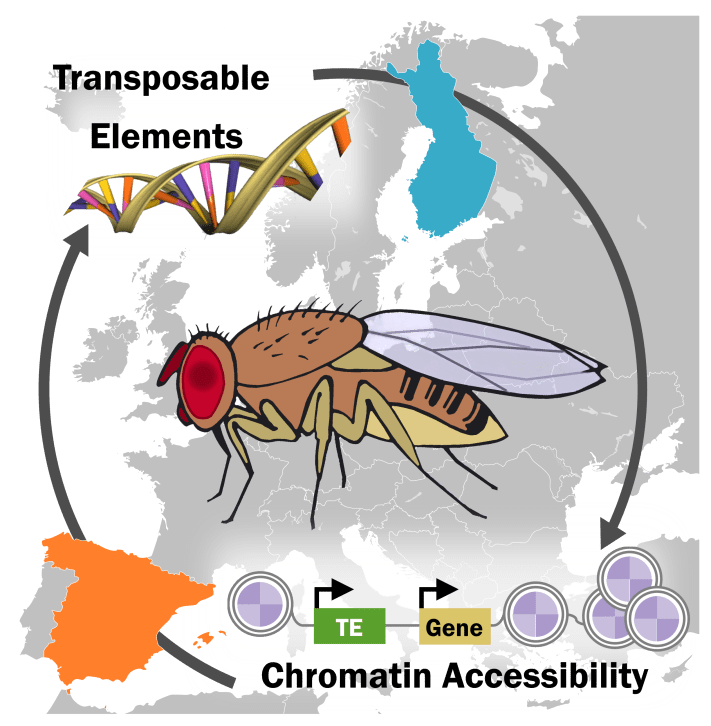
The project was all about understanding interactions between chromatin (the complex of DNA and protein making up chromosomes) and transposable elements (fragments of genomic DNA that can replicate independently and act as powerful mutagens). I wanted to know if the interactions between these two factors could play a role in rapid adaptation to environmental stress. You can see a summary of the project on a new dedicated MSCA summary page.
A graphical representation of the InterChromaTE project.
The fellowship has been a great experience from both a professional and a personal viewpoint: I had an amazing time living and working in Barcelona, and I will miss everyone at IBE. However, I am sure I will be back to visit soon!
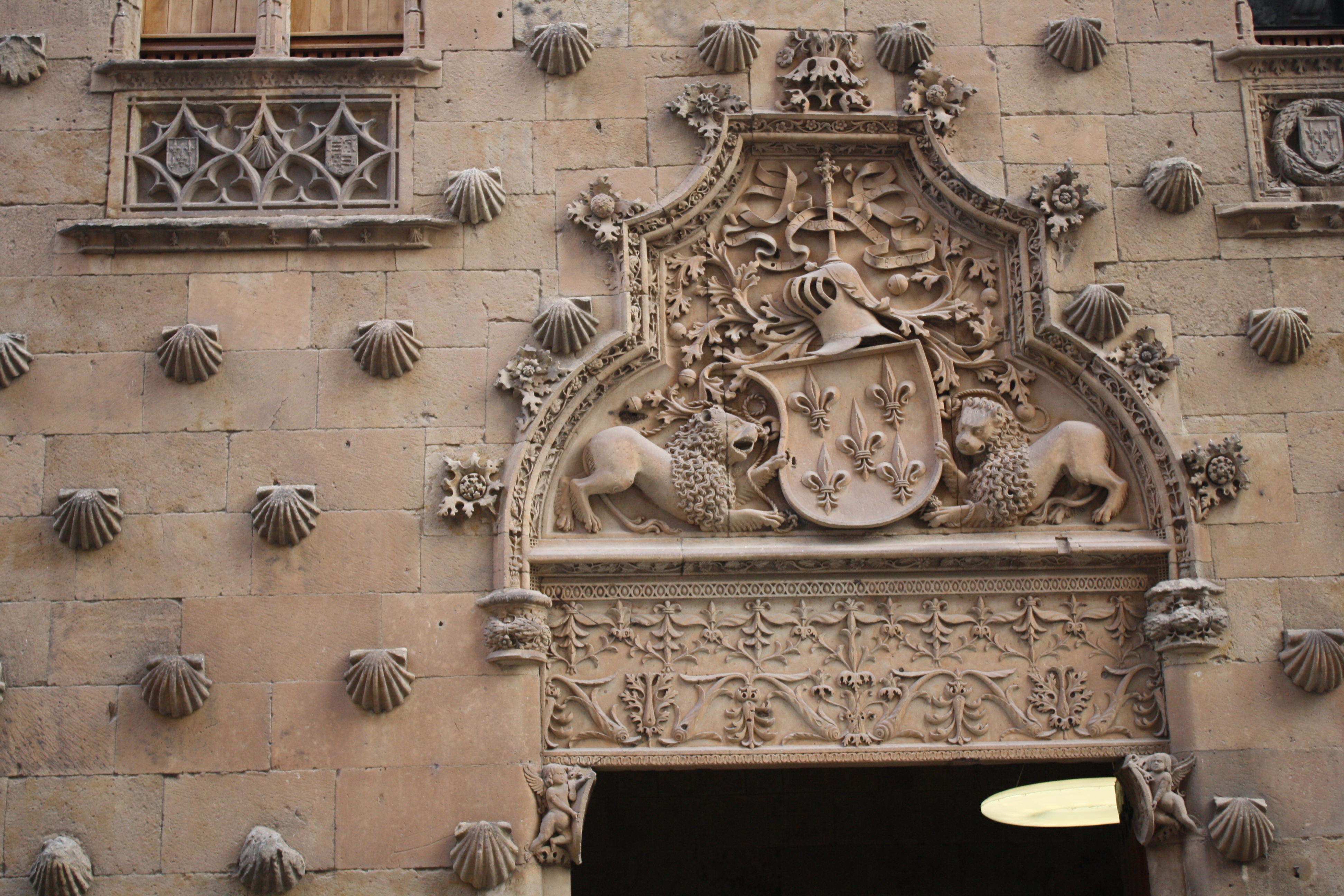
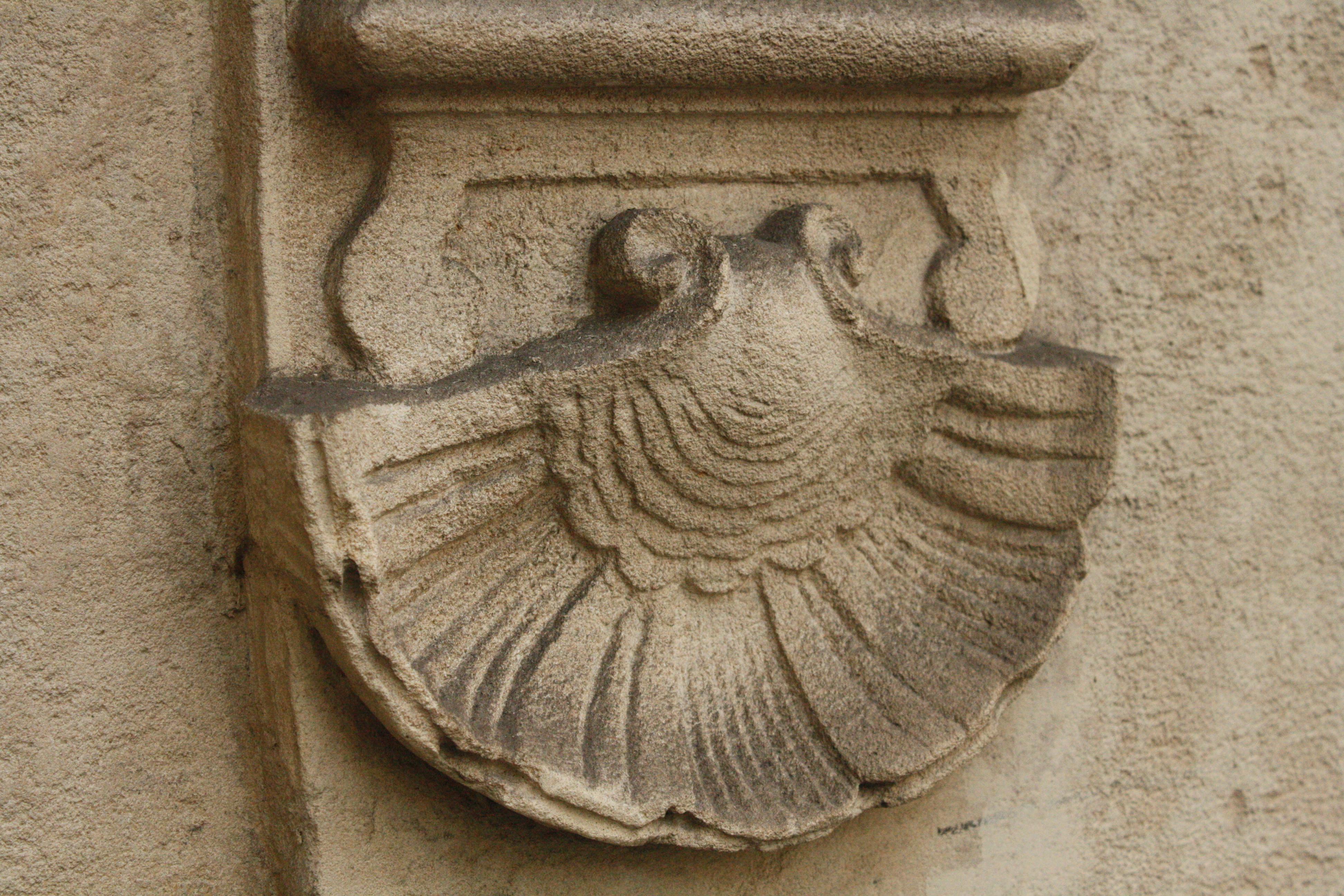
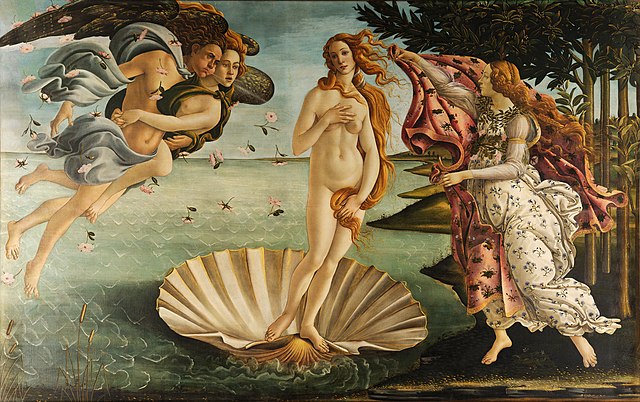
If you’re ever wandering around a historic European city, you may be surprised to see a certain seashell adorning the façades of many public and religious buildings: the stately scallop.
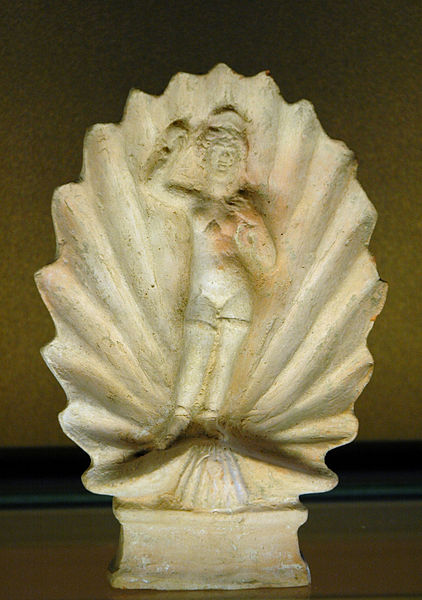
Since working with scallops during my fellowship at IUEM in France, I’ve had a bit of a soft spot for these marine molluscs. I’ve also started seeing them everywhere. Both in Classical and Neoclassical architecture the scallop was a popular adornment for many grand buildings, and historically has been an important cultural symbol.
Aphrodite Anadyomene (1st century BC–1st century AD) and The Birth of Venus by Sandro Botticelli. Scallops have signified both fertility and religious pilgrimage at various points in European history. Images courtesy of Wikimedia commons.
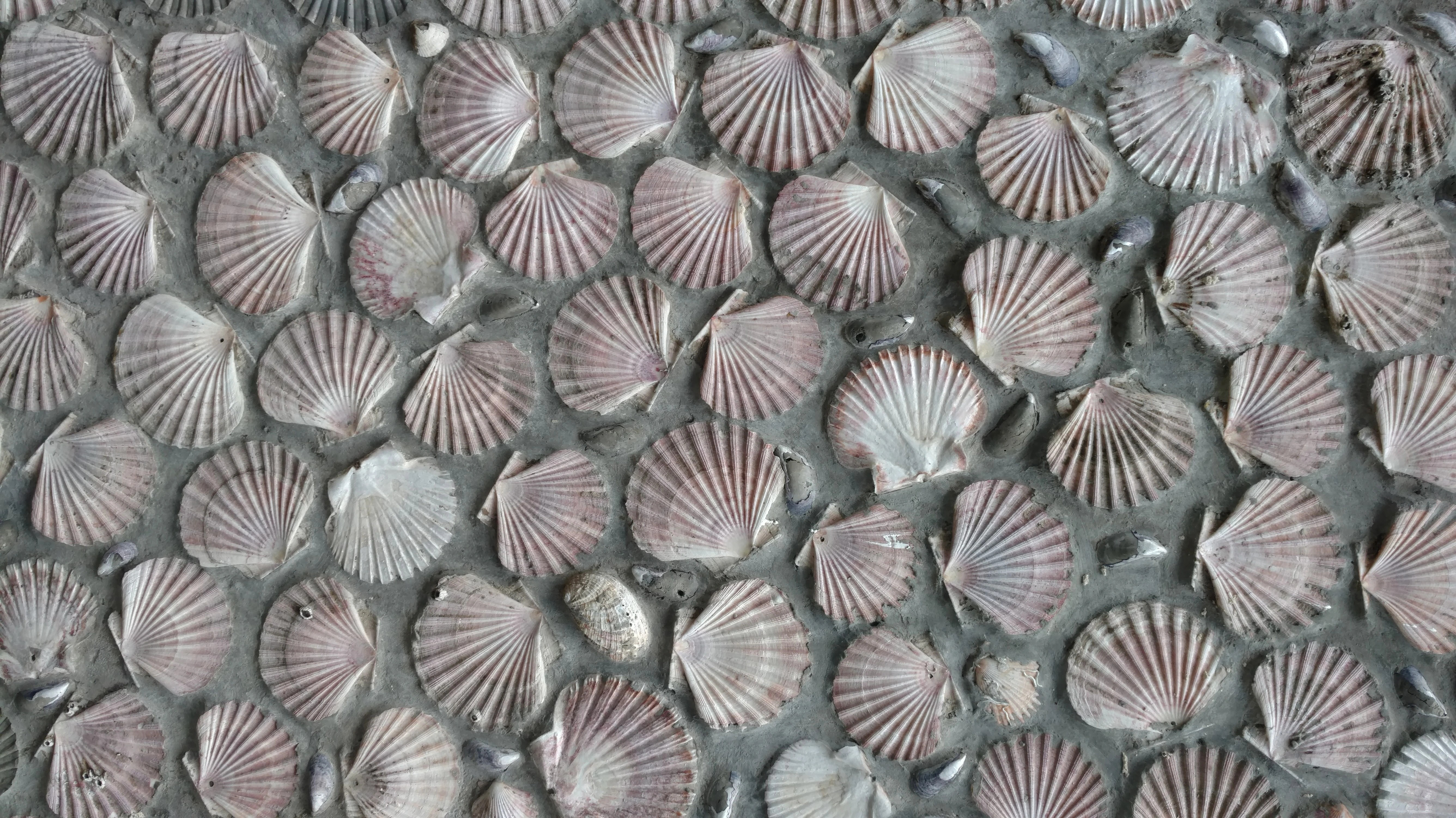
Scallops are an important fishery for many parts of western Europe, from Portugal to Norway. They are the third most valuable wild caught fishery in the UK, and also an important resource in Brittany, France, where I worked for 4.5 years after my PhD.
Last month a study led by my old lab group at IUEM published a paper in Aquatic Conservation Marine and Freshwater Ecosystems showing spatial genetic structure in great scallop (Pecten maximus) populations in the English Channel. This means that in the west of the Channel (Brittany and south-west England), scallop populations differ from one another and may require different management strategies; conversely stocks in the east of the Channel (Normandy and northern France, and south-east England) are genetically more similar, suggesting that the UK and France will have to cooperate in managing this stock (not a given, considering how contentious these fisheries are, and the elephant in the room that is Brexit).
As well as requiring regulation of the harvest itself, scallop fisheries also need to be carefully managed in terms of their wider effects on the ecosystem. Most scallop fisheries are dredged, a destructive process which reduces biodiversity and productivity of the benthic habitats in which the scallops live, with knock-on consequences for other finfish and shellfish species. With the exception of an MSC (Marine Stewardship Council) certified stock in Shetland, the MCS (Marine Conservation Society) advises that most other UK dredged stocks are either requiring improvement or to be avoided.
A number of British stocks are undergoing a fisheries improvement project to increase their sustainability over the next few years, but a more sustainable option in the meantime is dive-caught scallops (generally classed by the MCS as good or OK), or better yet, farmed scallops, which achieved best choice in this year’s MCS Good Fish Guide.
Of course aquaculture is no silver bullet for increasing food sustainability and reducing ecosystem degradation. For many finfish it comes with its own share of environmental and ecological challenges: fish waste, unsustainably sourced fish food, and contamination of wild stocks with escapees are all significant problems that fish farmers have to contend with and overcome. However, because they are filter feeders, aquaculture of molluscs sidesteps many of these issues: and so in terms of sustainable sources of seafood protein, farmed scallops show a lot of promise.




 Ewan Harney
.jpg)
